
Commercial LED lighting retrofits in Metro Detroit
Handmade Electric retrofits commercial lighting across Metro Detroit in warehouses, retail space, offices, and shops. A retrofit changes what is in the ceiling, and it changes three things at once: what the lighting costs to run, how often someone has to get up there to fix it, and whether people can actually see what they are doing.
What determines the scope
The fixture count is the number everyone asks about first. It is rarely the thing that decides the job.
Ceiling height and access
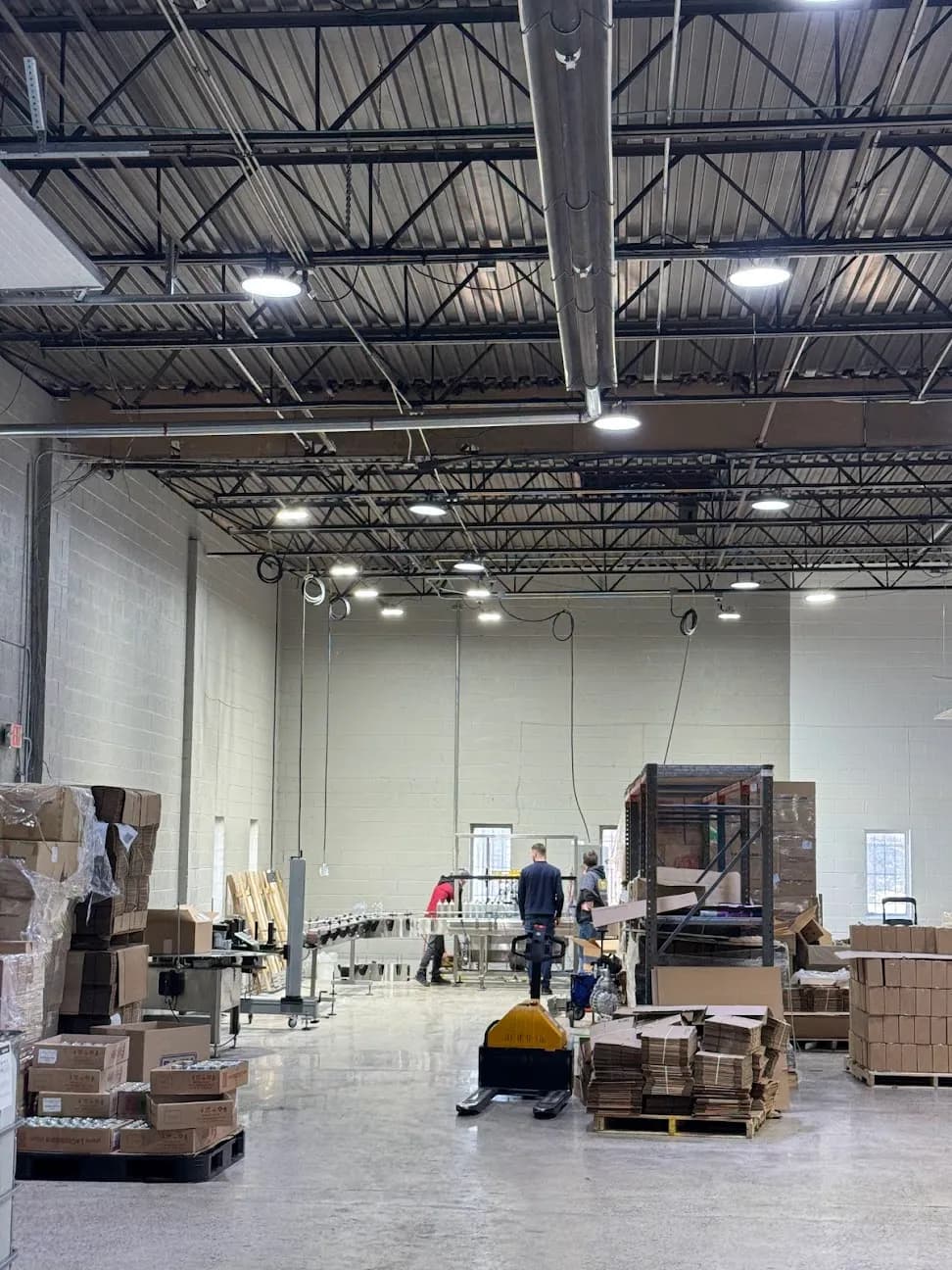
A twelve foot office ceiling and a thirty foot warehouse ceiling are different jobs at the same fixture count, because the second one needs a lift, more time per fixture, and a plan for working over racking and inventory.
Retrofit kit or full fixture replacement
Sometimes the existing housing stays and the internals are replaced. Sometimes the whole fixture comes out. Condition, age, and what you are trying to achieve on light levels decide which, and they cost differently.
What is behind the fixtures
Existing wiring, ballasts, and switching are frequently the actual work. A space that has been reconfigured several times often has circuits and controls that no longer match how the space is used.
Controls
Occupancy sensors, daylight sensors, and zoning change both the install and how much the lighting actually saves once it is running. A warehouse aisle that is empty most of the day is the clearest case for them.
Light levels for the work being done
A parts counter, a packing bench, a retail display, and a storage aisle do not want the same amount of light. Matching the space to the work is the difference between a retrofit that people are glad about and one they complain about.
When it can happen
Work that has to happen outside operating hours costs differently from work that can happen during the day.
What to expect during the work
For a facility manager, the disruption question matters as much as the quote.
- Work is normally staged by area so the whole building is not down at once, and you keep operating.
- Areas being worked on need to be clear underneath, particularly where a lift has to get in.
- Circuits are off in the section being worked on, which sometimes affects more than the lighting depending on how the space is wired.
- Old lamps and ballasts have to be handled and removed properly rather than left in a dumpster out back.
- Light levels change noticeably. That is the point, and it is worth walking a finished area before the rest of the building is committed.
- Any utility rebate programs that apply have their own paperwork and their own requirements, and those requirements can affect which product goes in. Worth raising before the order rather than after.
How the work goes
Step 01
Walk the space
Fixture count and type, ceiling height, access, existing circuits and controls, and what work is actually happening under each area.
Step 02
Scope and quote
You get the approach, the product, and the cost, including anything in the existing wiring or controls that the retrofit would expose.
Step 03
Schedule around operations
Areas, sequence, and hours are planned with you, so the work lands where it costs your business the least.
Step 04
Install by area
Section by section, with the old material removed as it goes rather than stacked in a corner.
Step 05
Walk it before signing off
Look at the finished areas with the lights on during the hours the space is actually used.
Common questions
Is an LED retrofit actually worth it?
Can you do the work without shutting down the business?
What does a lighting retrofit cost?
Should we add occupancy sensors?
What happens to the old fixtures and lamps?
Are there rebates for commercial lighting upgrades?
Tell us what is going on
Describe the problem or the project and we will pick it up from there. Handmade Electric works across Metro Detroit on residential, commercial, and industrial electrical, and on Generac home standby generators.
Prefer to text? Send a text to (248) 787-0071